Description
Potent regenerative peptide for tissue repair and recovery research.
BPC-157 (Body Protection Compound-157) is a pentadecapeptide extensively researched for its regenerative and cytoprotective properties across multiple tissue types. Laboratory studies investigate its mechanisms in promoting angiogenesis, collagen deposition, and growth factor expression in wound healing models. Research focuses on its effects on fibroblast proliferation, extracellular matrix remodelling, and anti-inflammatory signalling pathways using in-vitro tissue cultures and animal injury models. The compound is studied for its potential in accelerating tissue repair, reducing inflammation, and supporting cellular recovery across diverse tissue systems.
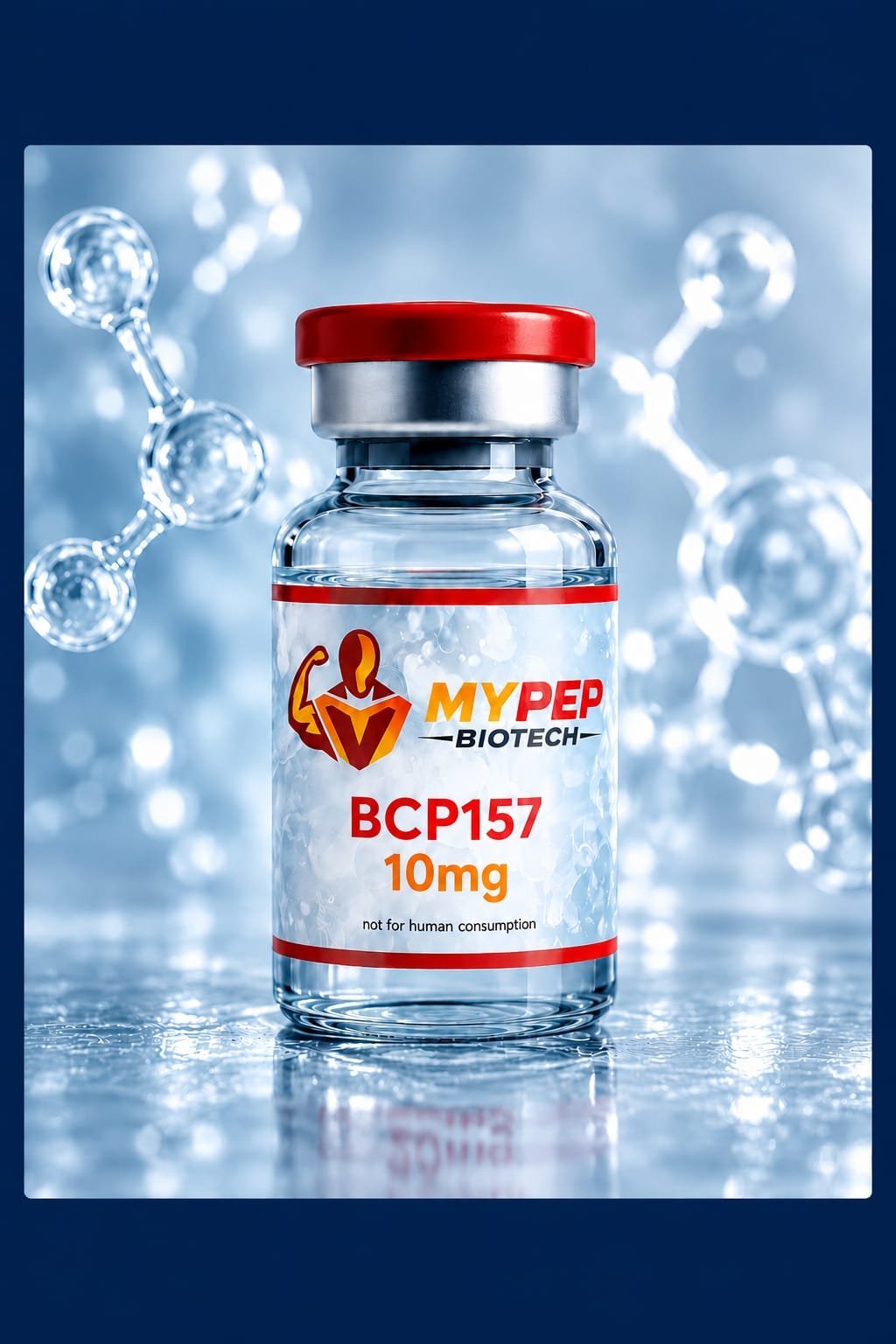
Buy BPC-157 research peptide in the UK from MyPep Biotech. Every batch of BPC-157 is HPLC-tested to 99%+ purity with a Certificate of Analysis available, held in UK stock and dispatched same-day — supplied for laboratory and in-vitro research use only.
- Genuine UK stock — dispatched from the UK
- Same-day dispatch on paid orders
- HPLC-tested for verified purity
- Secure, tracked UK delivery
BPC-157 (bpc157 peptide) is a synthetic peptide derived from a fragment of body-protection compound found in gastric juice, and it is one of the most frequently referenced peptides in preclinical tissue-repair research. MyPep Biotech is a UK peptide supplier providing BPC-157 (bpc157 peptide uk) for laboratory research purposes only, with HPLC-verified purity and a batch-specific Certificate of Analysis included with every order.
Why BPC-157 Is a Focus of Regeneration Research
Preclinical studies have examined BPC-157’s interaction with several signalling pathways associated with angiogenesis, fibroblast activity and tissue-repair processes in animal models. This body of research has made BPC-157 a common reference compound in laboratory studies exploring wound-healing mechanisms, tendon and ligament repair models, and gastrointestinal tissue research. Its relatively short, stable peptide sequence also makes it a useful subject for structure-activity and stability studies within the broader regenerative-peptide research field.
Molecular Characteristics
BPC-157 is a pentadecapeptide — a 15-amino-acid chain — derived from a naturally occurring gastric protective protein. Its shorter length compared with many other research peptides contributes to its relative chemical stability, which researchers studying formulation and storage conditions frequently reference when comparing degradation profiles across peptide classes.
Purity Testing and Documentation
Every batch of BPC-157 supplied by MyPep Biotech is verified by HPLC prior to dispatch, with the resulting purity percentage and batch number recorded on the accompanying Certificate of Analysis. We recommend cross-referencing the COA against the vial’s batch number before use, and retaining the documentation with your study records for traceability.
Storage and Handling
BPC-157 should be stored lyophilised at -20°C, protected from light, and used within the stability period indicated on its Certificate of Analysis. Once reconstituted, refrigerated storage and prompt use within the recommended window help preserve peptide integrity. Detailed reconstitution calculations are available in our Research Guides.
Areas of Published Research Interest
BPC-157 has featured in a range of preclinical studies, including:
- Animal models of tendon, ligament and muscle tissue repair
- Gastrointestinal tissue-protection and healing research
- Angiogenesis and vascular signalling studies
- Comparative research alongside other regeneration-focused peptides such as TB-500
As with other research compounds, protocols and reference concentrations vary considerably depending on the specific model system and study objective, so we recommend reviewing current peer-reviewed literature before designing a new protocol.
Origin, Regulatory Status and Safety Considerations
BPC-157 — short for Body Protection Compound BPC-157, and also referred to in the literature as body protective compound 157 — is a synthetic peptide fragment derived from a stable sequence identified in human gastric juice. Preclinical studies involving injection of BPC 157 in animal models of gastric ulcers, tendon and ligament injury, bladder pain and multiple types of knee pain suggest the peptide promotes cell migration, angiogenesis and other healing properties associated with tissue repair, potentially via upregulation of growth factor signalling pathways.
BPC-157 has not been evaluated by any national drug administration for human use, and no large-scale human clinical trials have established its efficacy and safety, long-term outcomes, or full range of adverse effects and side effects in people. It has also been added to the World Anti-Doping Agency (WADA) prohibited list, meaning athletes tested under Anti-Doping Agency WADA rules are barred from its use in or out of competition. For these reasons, MyPep Biotech supplies BPC-157 strictly for laboratory and in-vitro research use only.
Research Use Only
BPC-157 supplied by MyPep Biotech is intended strictly for laboratory and in-vitro research. It is not manufactured, labelled or sold for human or animal consumption, diagnostic use or therapeutic application of any kind. Researchers are responsible for securing appropriate institutional and ethical approval before beginning any study.
Ordering BPC-157 From MyPep Biotech
Orders are dispatched from our UK facility with tracked delivery and a matching batch Certificate of Analysis. Contact our team before ordering if you require a specific concentration, larger quantity, or additional documentation for institutional records.
Frequently Asked Questions
Where can I buy BPC-157 peptide in the UK?
You can buy BPC-157 from MyPep Biotech, a UK-based research peptide supplier. Every batch of BPC-157 is HPLC-tested to 99%+ purity, held in UK stock, dispatched same-day and supplied with a batch-specific Certificate of Analysis for laboratory research use only.
Is BPC-157 HPLC-tested?
Yes. BPC-157 supplied by MyPep Biotech is verified by High-Performance Liquid Chromatography (HPLC) to confirm identity and purity, with the result recorded on the Certificate of Analysis for that batch. See our HPLC purity guide for how to read the result.
How should BPC-157 be stored and reconstituted?
Lyophilised BPC-157 should be stored cool, dark and dry, and reconstituted with bacteriostatic water before laboratory use. Our peptide reconstitution calculator converts the vial contents and diluent volume into a working concentration. BPC-157 is for research use only.
Related research resources
- What Are Peptides? A Researcher’s Guide →
- HPLC Purity Guide →
- Peptide Storage Guide →
- Peptide Reconstitution Calculator →
- Research Peptides UK Sourcing Guide →
Buy BPC-157 in the UK
Researchers looking to buy BPC-157 UK-side can order BPC-157 online directly from MyPep Biotech, a UK-based research peptide supplier. If you are deciding where to buy BPC-157 or looking for the best place to buy BPC-157 for laboratory work, we hold BPC-157 in genuine UK stock, HPLC-tested to 99%+ purity with a batch-specific Certificate of Analysis, and dispatch same-day. As an established UK peptide store and peptide company, we make it straightforward to purchase peptides UK-side with tracked delivery.
BPC-157 is supplied strictly for laboratory and in-vitro research use only. For general context on sourcing, buying peptides UK-side and how to get peptides from a verified peptide supplier, see our research peptides UK guide. We do not provide administration or dosing information of any kind.
Helpful research resources
- Wolverine Stack (BPC-157 + TB-500) →
- Research peptides UK: sourcing & buying guide →
- Bacteriostatic water guide →
- Peptide storage guide →
- Research compound handling guide →
- Peptide reconstitution calculator →
- Research peptide FAQ →
Read our guide: What Is BPC-157 Studied For? →
BPC-157 evidence quality and transparent reporting
Researchers should distinguish exploratory findings from replicated evidence and limit conclusions to the model, material and conditions tested. Record the BPC-157 batch, analytical documentation, preparation method, concentration, exposure interval, controls, replicate counts and statistical approach. Chromatographic purity should be considered together with identity, stability, handling and assay suitability.
Indexed background studies can be searched through PubMed. Our guide to reading peptide research covers study design, bias and reproducibility, while the peptide limitations and safety guide supports responsible interpretation.
Research-use notice: BPC-157 is supplied strictly for laboratory and in-vitro research and is not intended for human or veterinary use.

Reviews
There are no reviews yet.