
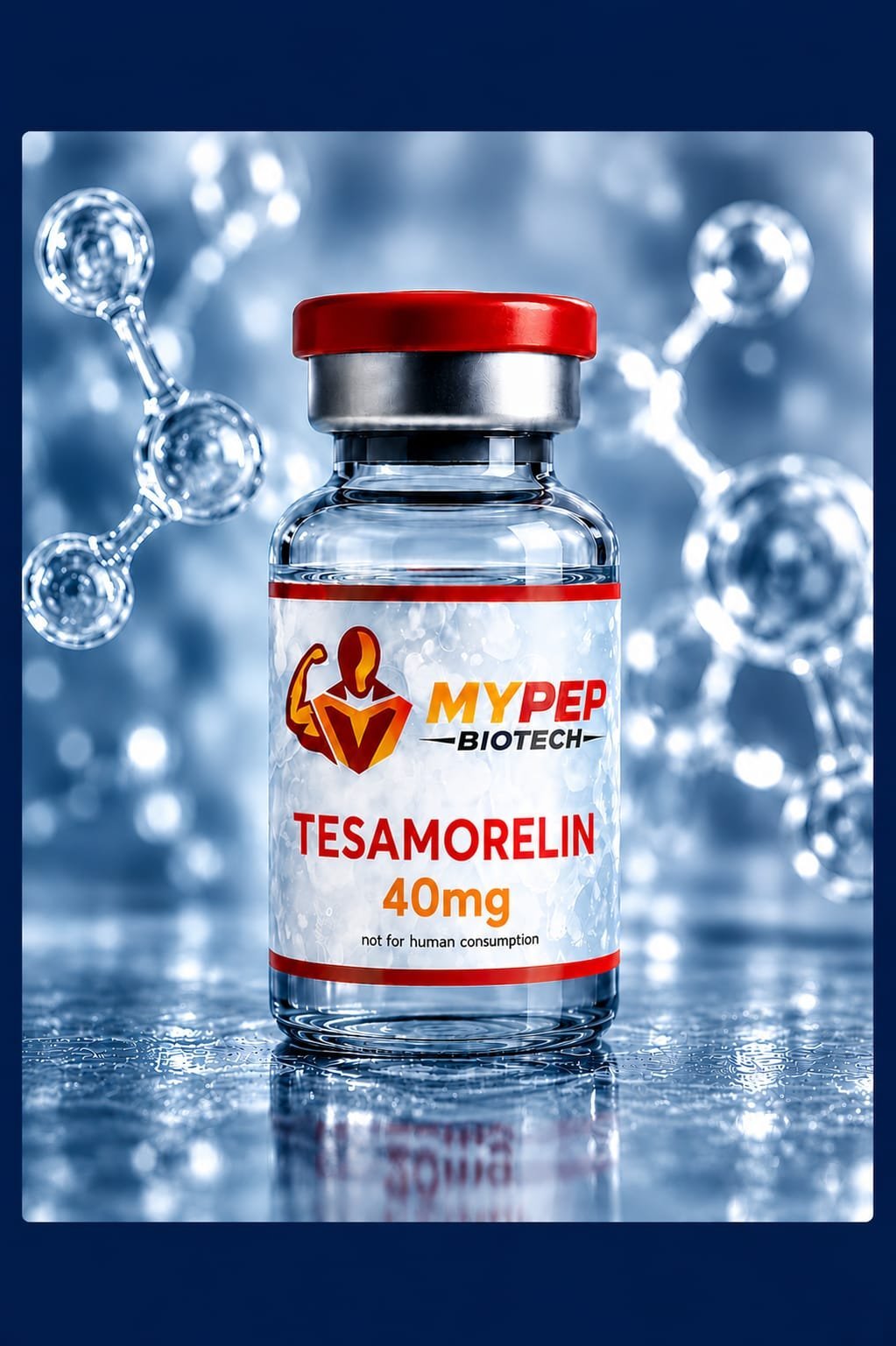
Description
Tesamorelin 20mg research peptide supplied strictly for laboratory and in-vitro research use. Not for human or animal consumption, diagnostic use or therapeutic application.
Tesamorelin is a synthetic analogue of growth hormone-releasing hormone used in experimental work concerning receptor signalling, peptide stability and endocrine-pathway models. This 20mg format is intended for controlled research with batch-level documentation.
- 20mg research format
- UK-held stock with tracked dispatch
- HPLC analytical documentation available
- Clearly labelled for research use only
Tesamorelin 20mg research context
As a GHRH analogue, tesamorelin is studied for its interaction with growth hormone-releasing pathways in defined laboratory and preclinical models. Researchers may compare its sequence, stability and receptor-related effects with other compounds studied within the same signalling system.
Findings from one analogue, concentration or model should not be applied automatically to another. Preclinical observations do not establish clinical safety, efficacy or suitability for personal use.
Molecular and analytical considerations
Sequence confirmation and batch traceability are essential when working with synthetic peptides. High-performance liquid chromatography can separate sample components and estimate chromatographic purity, while mass-spectrometry or other complementary methods may support molecular identity.
A purity figure does not demonstrate sterility, biological activity or therapeutic suitability. The HPLC purity guide and Certificate of Analysis guide explain common analytical documentation fields.
Experimental design
- Select a model appropriate to the receptor or pathway being studied.
- Use relevant negative, vehicle and positive controls.
- Record concentration, exposure time, lot and preparation details.
- Predefine primary outcomes and analysis methods.
- Report uncertainty, replicate numbers and study limitations.
Growth-hormone-axis research can involve multiple interacting signals. Researchers should avoid attributing a broad metabolic observation to one pathway without appropriate measurements and comparison groups.
Storage and handling
Peptide stability can be affected by temperature, moisture, light, oxidation and repeated freeze-thaw cycles. Follow the batch documentation and institutional standard operating procedures. Maintain a clear link between the vial, analytical certificate and experimental records.
See the peptide storage guide and research compound handling guide for general laboratory principles. Compound-specific validated procedures take priority.
Reviewing published evidence
Use primary sources and confirm that the tested sequence, model and outcome match the claim under review. Researchers can search PubMed for published studies, reviews and related citations.
Tesamorelin 20mg is supplied solely as a research material. Researchers are responsible for ensuring that ordering, storage, handling and experimental use comply with applicable law, institutional policy and ethical requirements.
Research record checklist
Record the exact tesamorelin sequence, supplier, batch, analytical certificate and storage history. Document the solvent system, preparation method, concentration, exposure period and receptor-related endpoints. If comparator analogues are included, apply equivalent handling and measurement procedures across groups.
Separate technical replicates from independent biological experiments and report all exclusions. Where a result depends on a growth-hormone-axis marker, include controls that help distinguish direct receptor-pathway activity from secondary changes in cell state or assay conditions.
Interpreting comparative studies
Analogues can differ in stability, receptor affinity and degradation even when they are studied within the same general pathway. Avoid ranking compounds using results from unrelated models or incompatible measurement methods. Comparative conclusions are strongest when materials are characterised, conditions are matched and the complete dataset is reported.
Tesamorelin 20mg method validation and data quality
Before interpreting results, verify assay sensitivity, specificity, working range and quality controls. Record instrument settings, calibration status, reagent lots and pre-defined acceptance criteria. Repeat measurements when a quality-control condition falls outside the approved range rather than choosing a different processing method after viewing the outcome.
When comparing studies, examine differences in material identity, preparation, model system, exposure schedule, sampling time and endpoint definition. Report limitations such as small sample sizes, surrogate endpoints, missing observations and uncertainty about stability. Archive raw files, calculation formulas, data transformations and software versions so the analysis can be reproduced independently.
Reviews
There are no reviews yet.