
Description
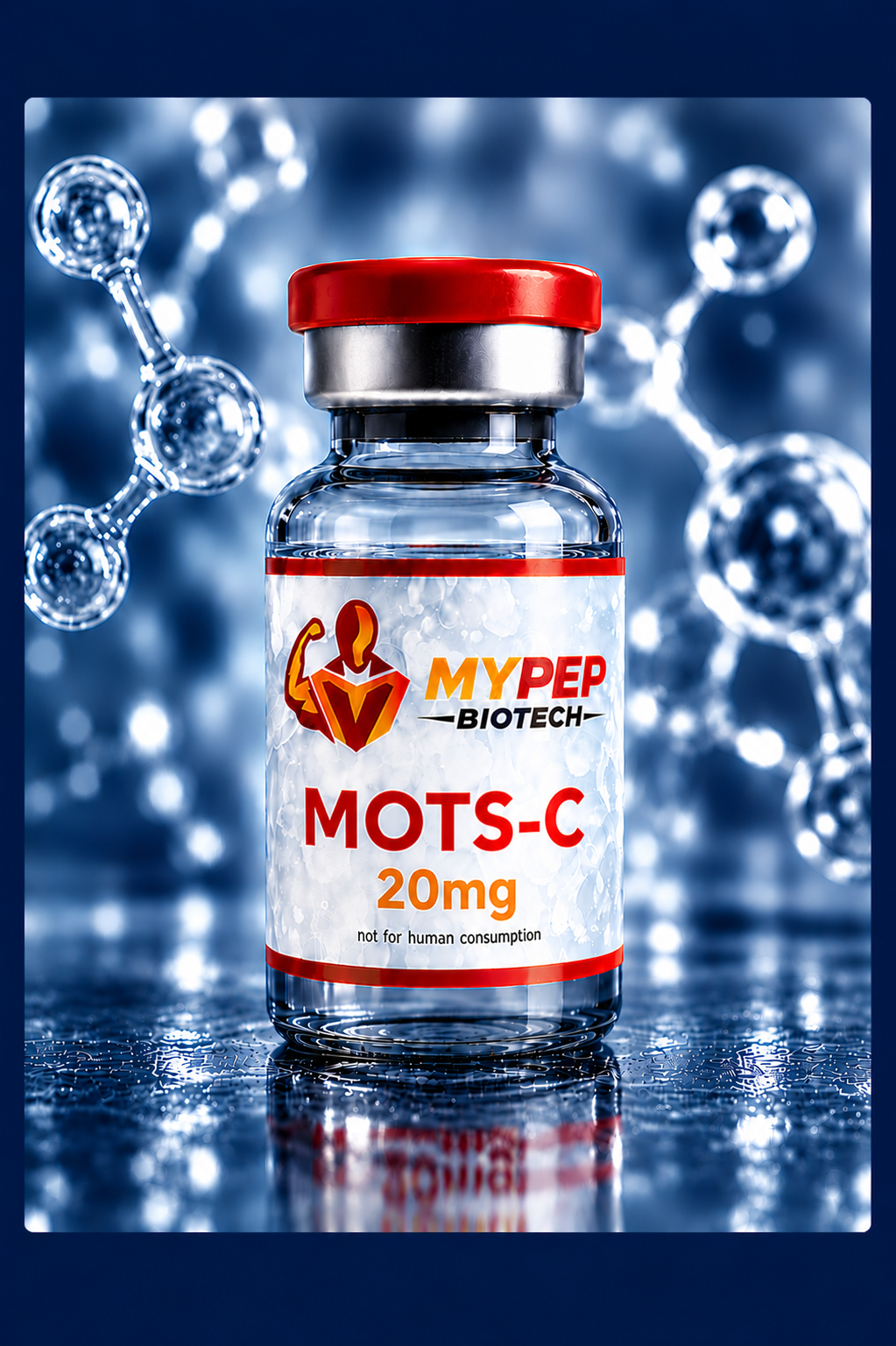
MOTS-C 20mg research peptide supplied strictly for laboratory and in-vitro research use. Not for human or animal consumption, diagnostic use or therapeutic application.
MOTS-C is a mitochondrial-derived peptide studied in experimental work concerning cellular signalling, metabolic stress and communication between mitochondrial and nuclear systems. This 20mg format is intended for controlled research with batch-level documentation and traceability.
- 20mg research format
- UK-held stock with tracked dispatch
- HPLC analytical documentation available
- Clearly labelled for research use only
MOTS-C 20mg research context
MOTS-C is a short peptide encoded within mitochondrial DNA. Its unusual origin has made it a subject of studies examining mitochondrial-derived signals and their relationship with wider cellular pathways. Published work includes biochemical, cell-based and preclinical models, each of which provides a different level of evidence.
Preclinical findings should not be translated into personal-use or therapeutic claims. Conclusions must remain specific to the sequence, model, concentration, exposure period and outcome measured.
Molecular and analytical considerations
Researchers should confirm the exact sequence and batch identity before beginning a study. High-performance liquid chromatography can estimate chromatographic purity by separating sample components, while mass-spectrometry or other complementary methods may support molecular identity.
A chromatographic purity figure does not demonstrate sterility, biological activity or suitability for any clinical purpose. See the HPLC purity guide and Certificate of Analysis guide for help reviewing analytical records.
Experimental design
- Select a model that directly addresses the research question.
- Include appropriate negative, vehicle and positive controls.
- Record concentration, exposure time, lot and preparation date.
- Predefine primary outcomes and statistical methods.
- Report replicate numbers, uncertainty and limitations.
Changes in one metabolic or stress-response marker should not be treated as a complete description of mitochondrial function. Where possible, researchers should use complementary measurements and independent replication.
Storage and handling
Peptide stability can be affected by temperature, moisture, light, oxidation and repeated freeze-thaw cycles. Follow the product documentation and institutional procedures, keep containers correctly labelled and retain lot information alongside the experimental record. Consult the peptide storage guide for general laboratory principles.
Reviewing published MOTS-C evidence
Use the original research paper rather than promotional summaries. Check the sequence, model, controls and endpoint before applying a conclusion to a new experiment. Researchers can search PubMed for primary literature, reviews and related citations.
MOTS-C 20mg is supplied solely as a research material. Researchers are responsible for ensuring that ordering, storage, handling and experimental use comply with applicable law, ethical requirements and institutional policies.
Research record checklist
Document the exact MOTS-C sequence, supplier, batch, analytical record and storage history. Record the solvent system, preparation method, experimental concentration and exposure period. Where possible, retain raw instrument output and predefine how mitochondrial or metabolic endpoints will be normalised.
Use independent measurements when a conclusion depends on a broad concept such as mitochondrial function. For example, a change in one signalling marker should be interpreted alongside relevant functional, viability and quality-control data. Distinguish direct peptide effects from changes caused by the vehicle, handling conditions or general cellular stress.
Reproducibility and reporting
Report replicate numbers, exclusions and full statistical methods. State whether experiments represent technical repeats or independent biological samples. Transparent reporting helps other researchers determine whether a MOTS-C observation is robust, model-specific or dependent on a particular protocol.
MOTS-C 20mg method validation and data quality
Before interpreting results, verify that the selected assay has suitable sensitivity, specificity, working range and quality controls. Record instrument settings, calibration status, reagent lots and pre-defined acceptance criteria. Repeat measurements when a quality-control condition falls outside the approved range rather than changing the processing method after viewing the outcome.
When comparing studies, account for differences in material identity, preparation, model system, exposure schedule, sampling time and endpoint definition. Report limitations such as small sample sizes, surrogate endpoints, missing observations and uncertainty about stability. Archive raw files, calculation formulas, data transformations and software versions so another laboratory can reproduce the analysis.


Reviews
There are no reviews yet.