Peptide Storage Guide: Best Practice for Research
Correct storage protects both peptide integrity and the value of high-purity research material. This guide sets out best practice for temperature, light, moisture, aliquoting and record-keeping across the peptide life cycle.
Temperature
Lyophilised peptides are typically stored at -20°C for long-term stability, with short-term fridge storage acceptable for material in active use. Reconstituted solutions should be refrigerated at around 2–8°C. Avoid repeated warming and cooling.
Light and moisture
Ultraviolet light and moisture both accelerate peptide degradation. Store vials in the dark, keep desiccant with dry material where practical, and add diluent to reconstituted solutions rather than exposing the pellet to humid air for extended periods.
Aliquoting and freeze-thaw
For material that will be used across many sessions, splitting a reconstituted peptide into single-use aliquots before freezing avoids repeated freeze-thaw cycles that can reduce potency.
Room-temperature stability guide →
Documentation
Record batch numbers, reconstitution dates and storage conditions alongside the Certificate of Analysis. Good records support traceability and reproducibility.
Certificate of Analysis guide →
Storage equipment and containers
The right storage equipment protects high-purity material between sessions. Many laboratories keep a small dedicated peptides fridge for reconstituted solutions and a freezer for lyophilised stock, and a purpose-made peptide storage case or insulated peptides cooler is useful for transporting temperature-sensitive vials without breaking the cold chain. Whatever container is used, the priorities remain the same: consistent temperature, protection from light, and dry conditions for lyophilised powder. Silica desiccant sachets help keep sealed containers dry, and clear labelling on every vial supports traceability.
Peptide vials, powder and other forms
Research peptides are supplied in several forms, and storage differs slightly for each. The most common is a sealed peptide vial containing lyophilised peptide powder, which is stable when kept cool, dark and dry until reconstitution. Some compounds are also referenced in oral research forms such as peptide capsules or peptides tablets. Whatever the format, keep the material sealed until needed, store it within its stability window and record the batch number so it can be matched back to its Certificate of Analysis.
Research compound handling guide →
Frequently Asked Questions
What temperature should peptides be stored at?
Lyophilised peptides are usually stored at -20°C for the long term, while reconstituted solutions are kept refrigerated at around 2–8°C. Always follow the stability window on the batch Certificate of Analysis.
How should I store reconstituted peptides?
Keep reconstituted peptides refrigerated and protected from light, and use within the timeframe appropriate to the compound. Aliquoting before freezing avoids repeated freeze-thaw cycles.
This article is provided for general research and educational information only. It does not constitute advice on human or animal use, dosing, or administration. All MyPep Biotech products are supplied strictly for laboratory and in-vitro research purposes and are not for human consumption.
← Back to all Research GuidesPeptide storage guide: build a defensible storage record
A peptide storage guide should distinguish between unopened lyophilised material, a prepared laboratory solution and short-term working aliquots. These forms may have different stability risks. Always follow the batch documentation and the laboratory’s approved procedure rather than assuming one temperature or timeframe applies to every compound.
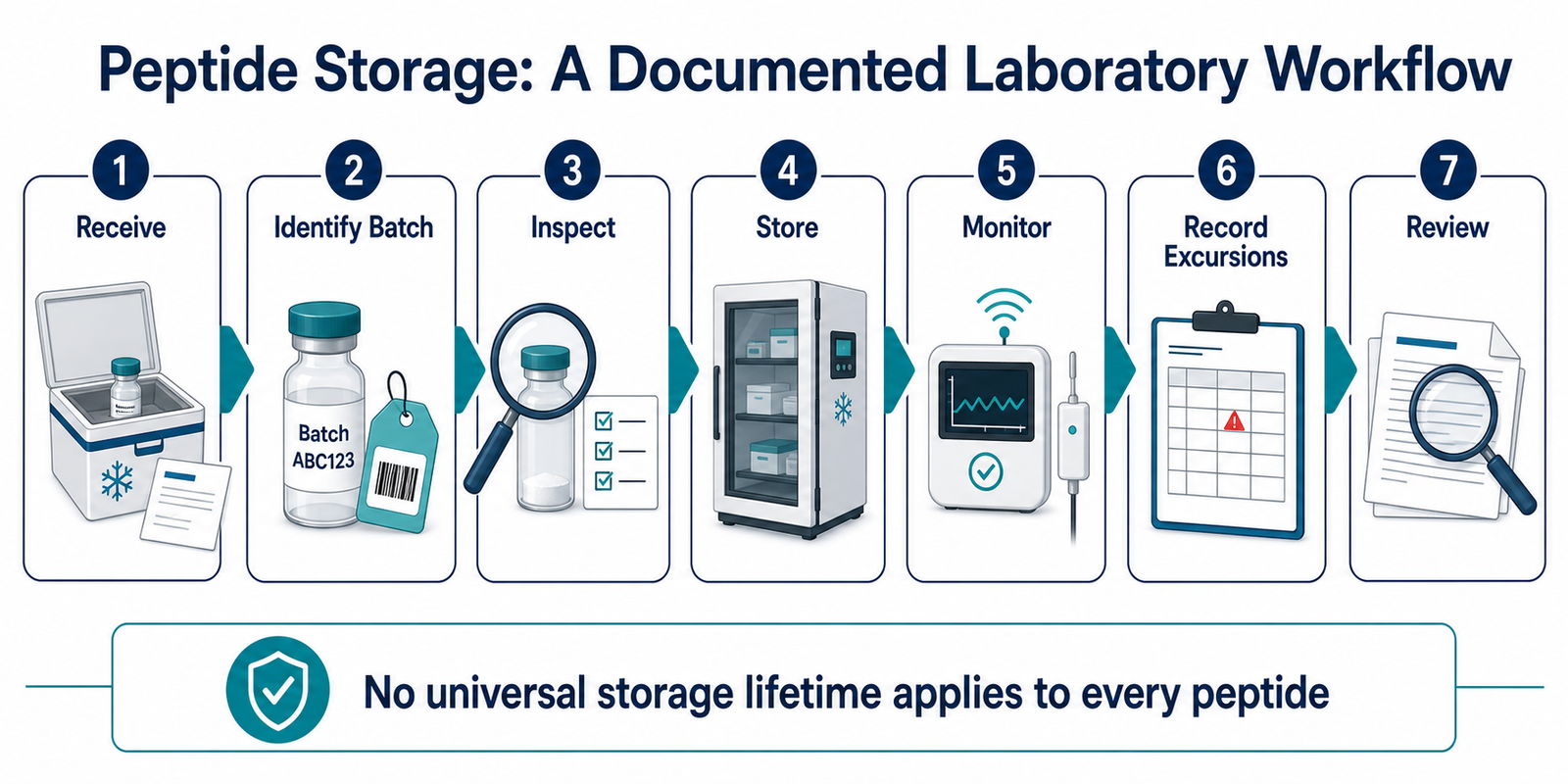
Seven best-practice storage controls
- Assign a unique material and batch identifier on receipt.
- Record the required temperature and the actual storage location.
- Protect material from unnecessary light, moisture and repeated temperature cycling.
- Minimise uncontrolled opening and record the first-access date.
- Use clearly labelled aliquots where the approved procedure requires them.
- Document temperature excursions and assess their impact before further laboratory use.
- Define review and disposal criteria in the project or quality procedure.
Why storage records matter
A complete log helps another researcher reconstruct what happened to a batch between receipt and analysis. Record transfers between freezers, refrigerators or work areas, including date, operator and reason. If material is prepared for an analytical procedure, link the preparation record back to the original batch and certificate.
See the research compound handling guide for receipt and preparation controls, and the COA guide for document traceability. The official ICH quality-guideline collection includes stability and analytical-quality resources relevant to controlled research environments.
Peptide storage FAQ
Is one storage temperature correct for every peptide?
No. Use the product documentation, known material characteristics and an approved laboratory procedure.
Why avoid repeated temperature cycling?
Repeated transfers can introduce condensation and uncontrolled variability. A documented aliquoting strategy may reduce unnecessary handling.
Can appearance confirm stability?
No. Visual inspection may detect obvious damage but cannot establish identity, purity or stability.
Research-use notice: Laboratory storage information only; this page does not provide administration or dosing instructions.