Certificate of Analysis: How to Read a Peptide COA
A Certificate of Analysis (COA) is the document that ties a specific vial to its test results. This guide explains what a COA contains, how to interpret each field, and how it supports traceability in research.
What a Certificate of Analysis contains
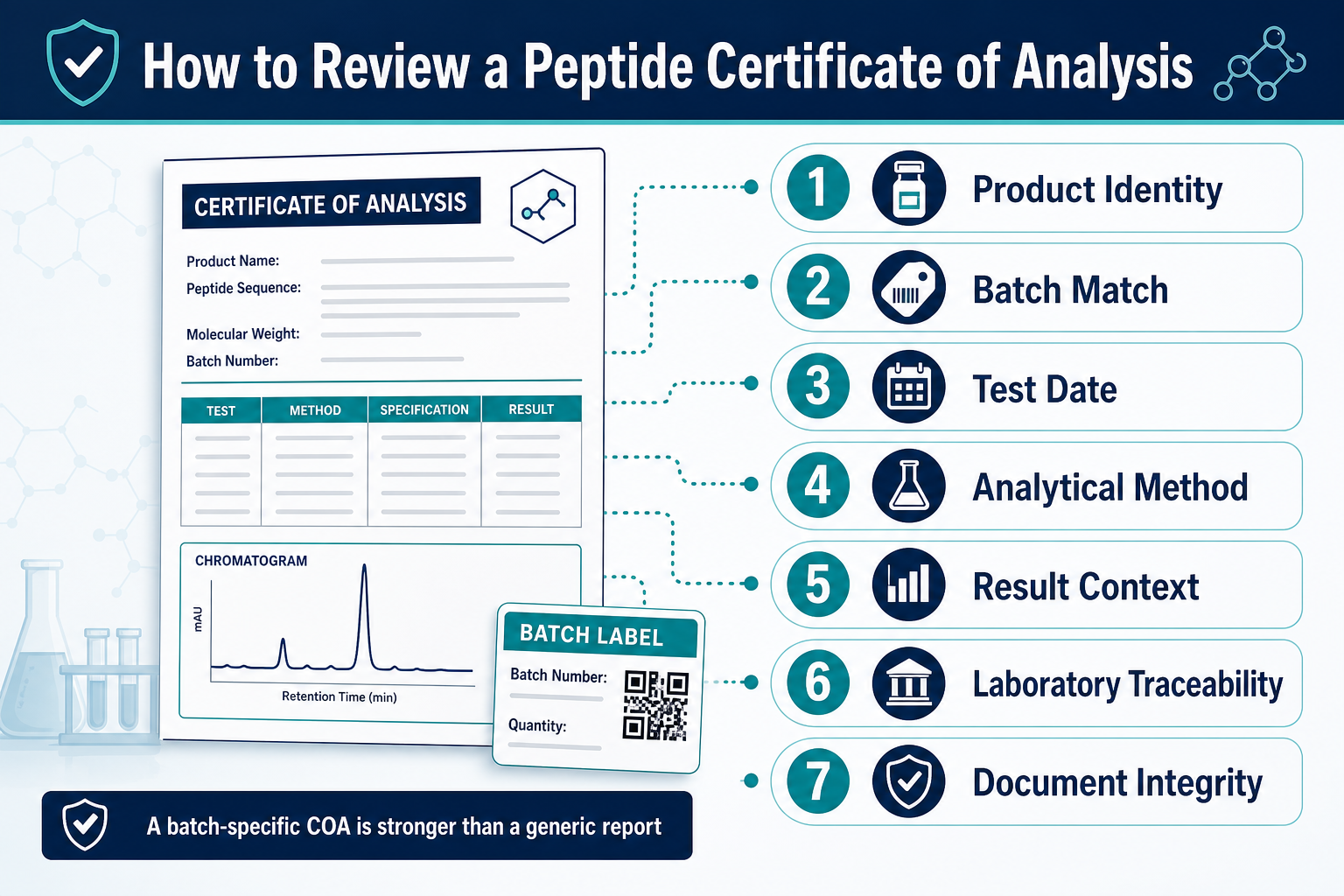
A batch-specific COA typically states the compound name, batch or lot number, measured purity (usually by HPLC), the analytical methods used, the test date and often the molecular weight confirmed by mass spectrometry. It should relate to the exact batch you received, not a generic sample.
How to interpret a COA
Match the batch number on the COA to the vial or packaging. Check the purity percentage and confirm the methods listed include HPLC for purity and ideally mass spectrometry for identity. The test date shows how recently the batch was analysed.
Why traceability matters
Keeping the COA with your laboratory records means every result can be traced back to a documented, verified batch — essential for quality control, audits and publication. MyPep Biotech provides a Certificate of Analysis on every batch.
Research peptides UK sourcing guide →
Frequently Asked Questions
What is a Certificate of Analysis for peptides?
A Certificate of Analysis is a batch-specific document showing a research peptide’s measured purity, identity, test methods and test date. It links the vial you received to verified laboratory results.
Why should a COA be batch-specific?
A generic COA does not prove anything about the vial in your hand. A batch-specific COA, matched by batch number, confirms that the exact material you received was tested and met the stated purity.
This article is provided for general research and educational information only. It does not constitute advice on human or animal use, dosing, or administration. All MyPep Biotech products are supplied strictly for laboratory and in-vitro research purposes and are not for human consumption.
← Back to all Research GuidesCertificate of analysis: seven checks that strengthen traceability
A certificate of analysis is most useful when it lets a technically competent reader connect a reported result to a specific sample and method. It should support a laboratory decision, not replace one. Review the full document and retain it with the receiving, storage and project records.
- Product identity: compare the named compound and form with the container label and purchase record.
- Batch identity: confirm an exact match between the certificate and the physical lot.
- Testing date: check when the sample was analysed and whether the report is final.
- Method: identify which technique supports purity and which supports identity.
- Result context: review chromatograms, spectra, acceptance criteria and units rather than only the headline percentage.
- Laboratory traceability: look for the testing organisation, report identifier and approval information.
- Document integrity: retain the original file and record where it was obtained.
Purity, identity and content are different measurements
An HPLC area percentage does not by itself establish molecular identity or the quantity of material in a vial. These are separate analytical questions. Read the HPLC purity guide for chromatogram context and the UK sourcing and quality guide for a wider supplier checklist.
The ICH quality guidelines describe principles for analytical procedure validation and development. Laboratories assessing external reports can also review UKAS publications on laboratory accreditation.
Certificate of analysis FAQ
Is a generic certificate sufficient?
A batch-specific report provides stronger traceability because its identifier can be matched directly to the material received.
Does 99% HPLC purity mean 99% vial content?
Not necessarily. Chromatographic purity and quantitative content are distinct measurements and should not be treated as interchangeable.
Should a certificate be retained after the project ends?
Follow the laboratory’s document-retention policy and applicable quality system. Keeping the report with the batch and project record supports later review.
Research-use notice: This page supports laboratory document review only and is not guidance for human or veterinary use.