Description
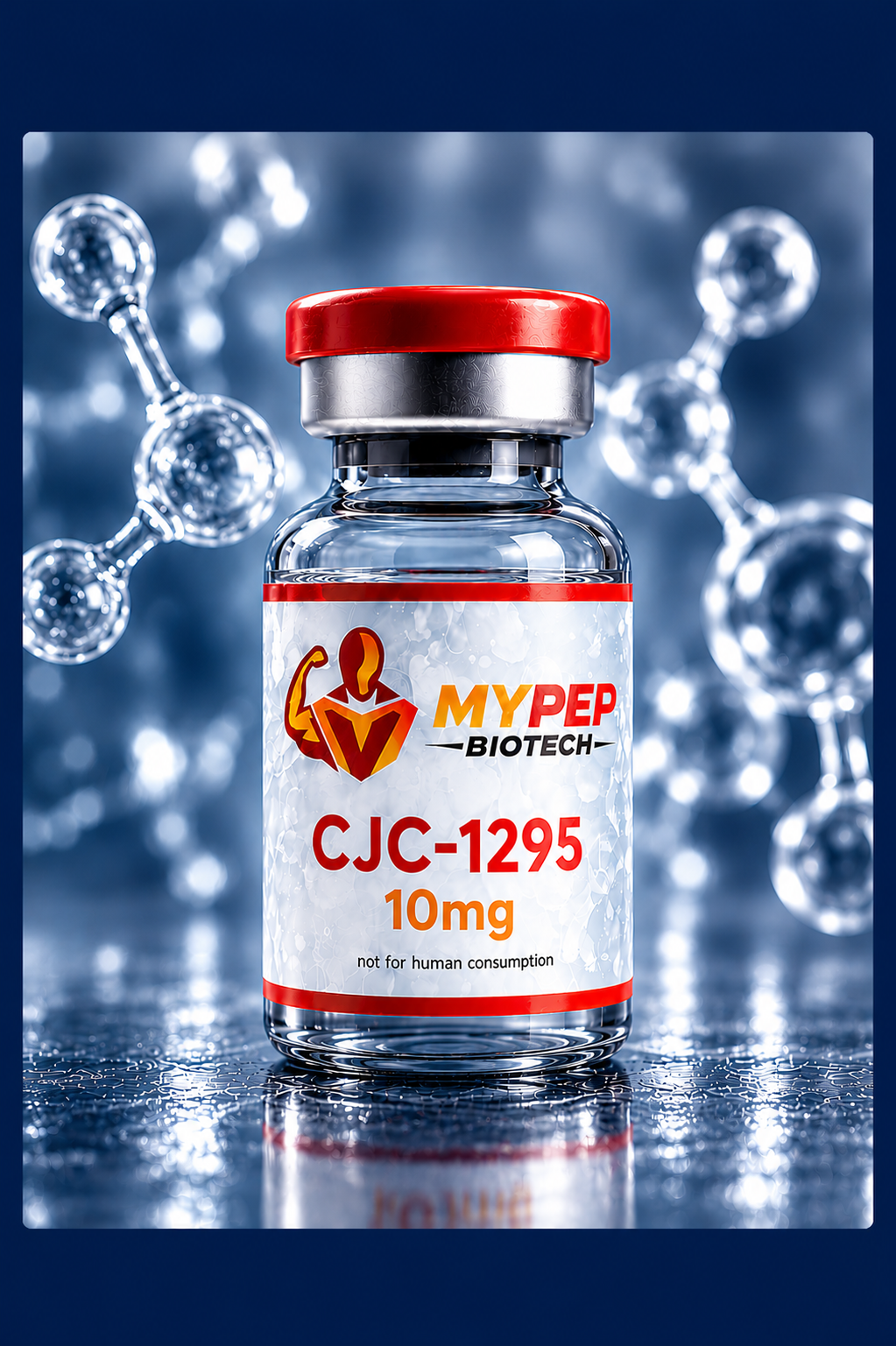
GHRH analogue with Drug Affinity Complex for an extended half-life and sustained GH elevation in research.
Research context: CJC-1295 DAC is studied as a growth-hormone-releasing hormone analogue containing a drug affinity complex. Laboratory work should define the model, exposure conditions and analytical endpoints before testing.
Common research characteristics:
- Extended-duration analogue design
- Receptor-signalling and pharmacokinetic research
- Controlled comparison with non-DAC analogues
- Batch-specific analytical documentation
Purity: 99.6%
Buy CJC-1295 DAC research peptide in the UK from MyPep Biotech. Every batch of CJC-1295 DAC is HPLC-tested to 99%+ purity with a Certificate of Analysis available, held in UK stock and dispatched same-day — supplied for laboratory and in-vitro research use only.
- Genuine UK stock — dispatched from the UK
- Same-day dispatch on paid orders
- HPLC-tested for verified purity
- Secure, tracked UK delivery
Buy CJC-1295 DAC in the UK
Researchers looking to buy CJC-1295 DAC UK-side can order CJC-1295 DAC online directly from MyPep Biotech, a UK-based research peptide supplier. If you are deciding where to buy CJC-1295 DAC or looking for the best place to buy CJC-1295 DAC for laboratory work, we hold CJC-1295 DAC in genuine UK stock, HPLC-tested to 99%+ purity with a batch-specific Certificate of Analysis, and dispatch same-day. As an established UK peptide store and peptide company, we make it straightforward to purchase peptides UK-side with tracked delivery.
CJC-1295 DAC is supplied strictly for laboratory and in-vitro research use only. For general context on sourcing, buying peptides UK-side and how to get peptides from a verified peptide supplier, see our research peptides UK guide. We do not provide administration or dosing information of any kind.
Helpful research resources
- Research peptides UK: sourcing & buying guide
- Bacteriostatic water guide
- Peptide storage guide
- Research compound handling guide
- Peptide reconstitution calculator
- Research peptide FAQ
CJC-1295 DAC laboratory study design
Experimental plans should distinguish chemical identity, receptor-level observations and downstream assay endpoints. Include vehicle and negative controls, define sampling intervals in advance and use a comparator appropriate to the model. Findings from one system should not be generalised beyond the conditions actually tested.
Quality and reporting checklist
- Record the CJC-1295 DAC batch, Certificate of Analysis and storage history.
- State concentration, exposure duration, model system and replicate counts.
- Describe the analytical method and all data-processing steps.
- Report exclusions, deviations, null results and uncertainty.
Chromatographic purity should be interpreted alongside identity, stability, handling and assay suitability. See our peptide research evidence guide and compare the CJC-1295 without DAC research page. Indexed background literature is available through PubMed.
Research-use notice: Supplied strictly for laboratory and in-vitro research, not for human or veterinary use.
Data interpretation and reproducibility
Apply consistent sampling intervals, equipment settings and data-processing rules across every experimental group. Report individual observations where suitable, together with effect sizes and uncertainty intervals. Statistical significance alone does not demonstrate biological importance, and an unexpected result should prompt checks of stability, matrix interference, handling and instrument performance.
Randomisation and blinded measurement can reduce avoidable bias. Define sample-size assumptions, stopping rules and exclusion criteria before collecting data. Retain the original protocol, product label, analytical documentation, preparation records, raw instrument files, analysis code, deviations and final report under the laboratory quality system. Complete records allow the work to be reviewed and replicated independently.
Document environmental conditions, calibration status and reagent-lot information whenever these factors could affect the assay or interpretation of measured responses.
Any comparison across studies should account for differences in models, analytical methods, sampling times and reporting quality.
Where possible, publish sufficient methodological detail for another laboratory to reproduce the work, including software versions, calculation formulas and any transformations applied before statistical analysis.

Reviews
There are no reviews yet.