Buy KPV UK: quick answer
MyPep Biotech supplies KPV research peptide vials in the UK, labelled with strength and batch number, with same-day dispatch on weekday orders before 12pm and free UK delivery over £75.
❓ KPV peptide UK: questions answered →
KPV is a tripeptide (Lys-Pro-Val) studied in laboratory research and supplied alongside our lab supplies for research use only.
- KPV 10mg vial – £18.99
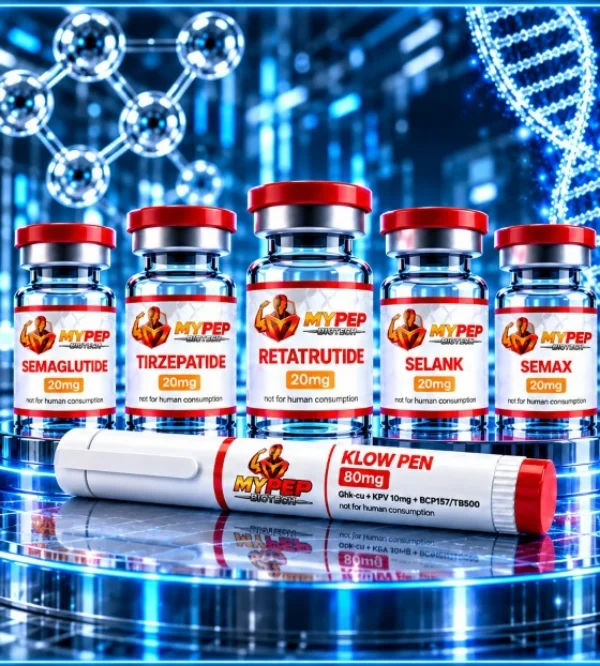
- Also in our KLOW 80mg pen (GHK-Cu + BPC-157 + TB-500 + KPV) – £79.99
- Bacteriostatic water from £3.99 · free peptide calculator
KPV peptide: key questions
How much is KPV in the UK?
A KPV 10mg research vial is £18.99 at MyPep Biotech. In our October 2026 price check this was among the lowest prices we found from UK research peptide suppliers.
What is KPV?
KPV is a tripeptide (lysine-proline-valine) taken from the end of alpha-melanocyte-stimulating hormone (alpha-MSH). It is studied in laboratory research on inflammatory signalling.
Is KPV in the KLOW blend?
Yes. KLOW is a four-peptide blend of GHK-Cu, BPC-157, TB-500 and KPV. We supply it as an 80mg pre-filled research pen for £79.99.
How should KPV be stored?
Store unopened vials in the fridge (2–8°C) away from light. After reconstitution with bacteriostatic water, keep refrigerated and label with the date and batch number.
Is KPV legal in the UK?
KPV is not a licensed medicine in the UK. All MyPep Biotech products are supplied strictly for laboratory and scientific research use only. They are not medicines and are not for human or veterinary use.


KPV Peptide UK – 10mg Research Vial
KPV 10mg, lyophilised research peptide supplied for laboratory and analytical research use only. Not for human consumption. Store refrigerated at 2–8°C away from light.
Technical Specifications & Quality Control
| Product Name | KPV — Vial |
| Available Strengths | Standard Calibrated Strength / Format |
| Physical Form | Lyophilised reference standard powder |
| Primary Container | Sterile borosilicate glass vial with crimped aluminium septum |
| Analytical Verification | Batch summary cards available on request – see our Quality & Batch Info page |
| Application Standard | Strictly intended for in-vitro laboratory research and reference standard applications |
All peptides and reference materials supplied by MyPep Biotech are strictly intended for in-vitro laboratory research and analytical standards. They are not intended for human consumption, medical diagnosis, therapeutic administration, or veterinary use. All purchasers must comply with standard UK laboratory handling regulations.
Free Peptide Calculator UK
Working out reconstitution? Use our peptide calculator to work out concentration (mg/ml) for any research vial size.
KPV Peptide UK — Research Information
KPV is a small three-amino-acid peptide that has attracted significant interest in scientific research, particularly in the areas of inflammation, gut biology, epithelial cells and cellular signalling.
The name KPV comes from the three amino acids that make up the peptide: lysine (K), proline (P) and valine (V).
KPV is also closely associated with alpha-melanocyte-stimulating hormone (α-MSH) because it represents the C-terminal three-amino-acid sequence of α-MSH.
Research into KPV has investigated how this small peptide interacts with inflammatory pathways and cellular responses. Studies have included laboratory experiments, cell models and animal research.
It is important to distinguish these research findings from proven human health benefits. KPV is a research compound and does not have an established human clinical safety or efficacy profile.
What Is KPV?
KPV is a tripeptide consisting of lysine, proline and valine. It is the C-terminal fragment of the naturally occurring peptide α-MSH.
Researchers became interested in KPV because studies suggested that this short peptide could demonstrate biological activity associated with inflammatory regulation without being identical to the complete α-MSH molecule.
KPV research has particularly focused on:
- Inflammatory signalling
- NF-κB pathways
- Intestinal inflammation
- Gut epithelial cells
- Skin and keratinocyte research
- Cellular signalling
- Peptide transport
- α-MSH-related biology
The small size of KPV also makes it an interesting molecule for researchers investigating how short peptides can influence cellular processes.
What Does KPV Do?
There is no established medical answer to this question because KPV has not been established as a human medicine.
However, laboratory and animal research has investigated KPV’s potential influence on several biological pathways.
One of the most interesting areas is inflammatory signalling.
Research has investigated whether KPV can influence pathways involved in the production and regulation of inflammatory mediators. Particular attention has been given to the NF-κB pathway, which plays an important role in cellular inflammatory responses.
KPV has also been studied in intestinal epithelial cells and experimental models of intestinal inflammation.
These findings are the reason KPV has become an interesting research peptide, but they should not be interpreted as proof that KPV treats inflammation or inflammatory disease in humans.
KPV Peptide Benefits: What Does the Research Show?
When people search for KPV peptide benefits, they are usually referring to the biological effects investigated in preclinical research.
Potential areas of research interest include inflammatory signalling, gut biology, epithelial-cell responses and cellular regulation.
KPV and Inflammation Research
Inflammation is one of the main areas of KPV research.
Experimental studies have investigated whether KPV can influence inflammatory signalling and reduce the activity of certain inflammatory pathways.
Research has particularly examined NF-κB signalling and inflammatory mediator production.
This has made KPV an interesting compound for researchers studying how short peptides may influence inflammatory responses.
KPV and Gut Research
KPV has received considerable attention in intestinal research.
Researchers have investigated KPV in experimental models of intestinal inflammation and have examined its interaction with intestinal epithelial cells.
Some animal studies have reported changes in inflammatory responses following experimental KPV exposure.
Researchers have also investigated peptide transport mechanisms involving KPV and intestinal cells.
These findings have helped make KPV an important subject of preclinical gut and inflammation research.
KPV and Skin Research
KPV has also been studied in skin-related cellular research.
Laboratory studies have investigated KPV in human keratinocyte cells and examined how it may influence inflammatory signalling within these cells.
This has contributed to interest in KPV research involving epithelial tissues and skin biology.
However, laboratory cell findings do not establish that KPV is an effective treatment for human skin conditions.
KPV and Cellular Signalling
Another reason researchers study KPV is its relationship with cellular signalling.
The peptide provides researchers with a relatively simple model for investigating how a very small peptide sequence can interact with biological pathways.
This includes research into inflammatory mediators, epithelial-cell responses and peptide transport.
KPV and Alpha-MSH
KPV is closely related to alpha-MSH, but the two peptides are not the same.
Alpha-MSH is a larger peptide consisting of 13 amino acids.
KPV represents the C-terminal three-amino-acid sequence:
Lysine – Proline – Valine
Research into KPV has partly developed from studies of α-MSH and its biological effects.
Researchers have investigated whether certain properties associated with α-MSH can also be studied using the smaller KPV sequence.
This relationship is an important part of understanding why KPV continues to attract scientific interest.
KPV Side Effects
What are the KPV side effects?
This is an important question because the human safety information available for KPV is limited.
There is currently not enough high-quality human clinical evidence to establish a comprehensive list of KPV side effects or a reliable long-term human safety profile.
Much of the available KPV evidence comes from:
- Laboratory studies
- Cell studies
- Animal models
- Preclinical research
Results from these models cannot automatically be applied to humans.
For that reason, it would not be appropriate to describe KPV as having a confirmed safe human side-effect profile.
Anyone researching KPV should distinguish between experimental findings and established human clinical evidence.
Is KPV Safe?
The most accurate answer is that human safety has not been adequately established.
KPV has demonstrated biological activity in preclinical research, but that does not establish that it is safe or effective for human use.
The FDA has noted that it has not identified human exposure data for KPV administered by any route and has highlighted that important safety information is lacking.
Therefore, KPV should be treated as a research compound, rather than a proven human treatment.
This distinction is particularly important when evaluating online claims about KPV benefits or safety.
Do You Have to Inject KPV?
KPV research has used different experimental approaches depending on the research model.
There is no established, universally accepted human administration method for KPV based on clinical evidence.
Research has investigated KPV in cellular models, intestinal models and animal studies, including studies examining exposure through different experimental routes.
These research methods should not be interpreted as instructions for human self-administration.
KPV products intended for laboratory research should remain within an appropriate research environment and should not be presented as medicines or as products for human consumption.
KPV UK
Interest in KPV UK has grown as peptide research has expanded and more people search for information about short-chain peptides.
For researchers looking for KPV in the UK, the most important consideration should be the quality and documentation of the research material rather than simply the cheapest price.
When evaluating a KPV research product, researchers may look for:
- Clearly identified KPV
- Stated purity
- Batch information
- Clear batch labelling
- Appropriate research-use labelling
- Clear supplier information
- Suitable storage information
A product appearing online does not automatically establish its quality, purity or suitability for any particular research application.
Where Can I Buy KPV in the UK?
KPV is available from a number of specialist research-peptide suppliers in the UK.
If you are researching where to buy KPV in the UK, it is important to establish that the product is clearly represented as a research compound.
Researchers should consider the available product documentation, stated purity and batch information rather than relying solely on price.
Searches for buy KPV UK, KPV UK and KPV peptide UK can return different suppliers and product specifications, so comparing the actual product information is important.
KPV research material should not be marketed as a treatment for inflammation, gut disorders, skin conditions or other medical conditions.
KPV Price UK
What is the price of KPV in the UK?
The advertised price of KPV can vary according to the supplier, quantity, stated purity and available batch documentation.
When comparing KPV price UK, the cheapest product is not necessarily the most appropriate research material. Researchers should also consider purity specifications, batch testing and supporting documentation.
KPV Peptide Research
KPV has been investigated for many years as part of research into α-MSH-related peptide biology.
Early research examined the anti-inflammatory properties of KPV and related peptides.
Later studies investigated KPV in intestinal inflammation models and examined how the peptide interacts with intestinal epithelial cells.
Research has also explored KPV in human-derived cell models, including studies involving keratinocytes and other epithelial cells.
These studies provide the scientific basis for continued interest in KPV, particularly in relation to inflammatory signalling.
However, the evidence remains predominantly preclinical.
More high-quality human research would be required to establish whether findings observed in laboratory and animal studies translate into meaningful human effects.
KPV and NF-κB Research
One of the most frequently discussed areas of KPV research is the NF-κB signalling pathway.
NF-κB is involved in regulating numerous genes associated with inflammatory and immune responses.
Researchers have investigated whether KPV can influence NF-κB-related signalling in different experimental models.
This is one possible explanation for why KPV has generated interest in inflammation research.
It is important, however, not to turn a cellular pathway finding into a claim that KPV treats inflammation in humans.
Research into a biological mechanism is not the same as clinical evidence of treatment effectiveness.
Why Are Researchers Interested in KPV?
There are several reasons KPV continues to attract attention.
First, it is an exceptionally small peptide consisting of only three amino acids.
Second, it is closely related to α-MSH, a peptide that has been extensively investigated in biological research.
Third, KPV has demonstrated biological activity in several experimental models.
Finally, research has identified interesting connections between KPV and inflammatory signalling, intestinal biology and epithelial cells.
This combination makes KPV an interesting compound for laboratory investigation.
KPV Frequently Asked Questions
What sizes does the KPV vial come in?
MyPep KPV comes as a 10mg research vial. The amount is printed on every label.
How much is in a vial of KPV?
Each MyPep KPV vial contains the amount printed on its label: 10mg of lyophilised (freeze-dried) powder, depending on the size you choose.
How fast is KPV delivery in the UK?
In-stock orders placed before 12pm are dispatched the same day by Royal Mail Tracked 24 (£3.95, free on orders over £75). Pre-orders are sent as soon as new stock lands, and the expected date is shown on the product page.
Is KPV for human use?
No. MyPep KPV is supplied strictly for laboratory research use only. It is not for human consumption, medical or veterinary use.
Is every KPV vial labelled with a batch number?
Yes. Every MyPep KPV vial is clearly labelled with the peptide name, amount and batch number, so each vial can be traced and recorded in your research notes.
What is KPV?
KPV is a three-amino-acid peptide consisting of lysine, proline and valine. It represents the C-terminal portion of α-MSH and has been studied extensively in preclinical research.
What does KPV do?
KPV has been investigated for its effects on inflammatory signalling, intestinal epithelial cells, NF-κB pathways and other cellular processes.
What are the benefits of KPV?
Research has identified potential biological effects involving inflammatory signalling, gut research and cellular responses. These are research findings and are not established human health benefits.
Is KPV safe?
A reliable human safety profile has not been established. Most available evidence comes from laboratory and animal research.
How is KPV studied in research?
KPV is studied in cell and animal models, mainly of inflammation and gut and skin tissue. MyPep Biotech supplies KPV strictly for laboratory research use only. Not for human or veterinary use.
Where can I buy KPV in the UK?
KPV research products are available from specialist suppliers. Researchers should check product identification, purity information, batch documentation and research-use labelling.
How much does KPV cost in the UK?
Advertised UK prices vary according to quantity and supplier.
Is KPV a peptide?
Yes. KPV is a tripeptide consisting of lysine, proline and valine.
Is KPV the same as α-MSH?
No. KPV is a much smaller peptide sequence associated with the C-terminal region of α-MSH.
What is KPV peptide used for?
KPV is primarily investigated as a research compound. Scientific research has examined its relationship with inflammatory signalling, gut biology, epithelial cells and cellular pathways.
KPV Research Summary
KPV is a small tripeptide consisting of lysine, proline and valine and is closely related to α-MSH.
The main scientific interest surrounding KPV involves inflammatory signalling, NF-κB research, intestinal biology, epithelial cells and cellular responses.
Preclinical research has produced interesting findings, particularly in laboratory and animal models of inflammation.
However, the available evidence does not establish KPV as an approved human treatment, and its human safety profile has not been adequately established.
For this reason, KPV should be considered a research peptide, with its potential biological effects investigated within appropriate research settings.
Research Use Only
KPV products supplied for research purposes are intended for laboratory research only and are not intended for human consumption, self-administration, diagnosis, treatment or prevention of disease.
The information on this page is provided for educational and research purposes and should not be interpreted as medical advice.

Fast & Tracked UK Delivery
Same-day dispatch before 12pm
KPV Peptide UK: Your Questions Answered
Clear answers to the questions people search about the KPV research peptide.
What is KPV?
KPV is a short peptide made of three amino acids: lysine, proline and valine. It is the active end fragment of alpha-MSH, a natural hormone, and is studied in inflammation research.
What is KPV studied for?
Laboratory and animal research has looked at KPV in inflammation, gut and skin models, including how it affects inflammatory signalling inside cells.
How much is KPV in the UK?
The MyPep Biotech KPV 10mg research vial costs £18.99, with same-day dispatch before 12pm and tracked UK delivery. Orders over £75 ship free.
How should KPV be stored?
Store freeze-dried KPV vials in the fridge at 2–8°C, away from light. Mix with bacteriostatic water and use our peptide calculator for the concentration.
Is KPV the same as BPC-157?
No. KPV is a three-amino-acid fragment of alpha-MSH studied mainly in inflammation research. BPC-157 is a 15-amino-acid peptide studied mainly in tissue repair research.
Is KPV legal in the UK?
KPV can be supplied for laboratory research only. It is not a licensed medicine. MyPep Biotech does not give dosing advice.